Little Known Facts About 3rd Party Welding Inspection.
Table of ContentsSome Ideas on 3rd Party Welding Inspection You Should KnowThe 8-Minute Rule for 3rd Party Welding InspectionExcitement About 3rd Party Welding InspectionHow 3rd Party Welding Inspection can Save You Time, Stress, and Money.8 Easy Facts About 3rd Party Welding Inspection ShownIndicators on 3rd Party Welding Inspection You Should KnowSome Known Details About 3rd Party Welding Inspection
In high-stakes industries where security and conformity are non-negotiable, deal independent, impartial evaluations that help make certain operations, devices, and infrastructure meet stringent regulatory requirements. Whether you remain in oil and gas, production, power generation, or building, counting on internal audits alone might leave space for prejudice and oversight. This is where a relied on provider like ends up being vital.This comprehensive overview will certainly stroll you via whatever you require to understand about, the advantages, industry applications, and how Partnership Infinite stands apart from the competitors. Another crucial advantage of third-party evaluations is the standardization they bring across geographically varied operations. For business with centers or projects in numerous regionssuch as Saudi Arabia, Bahrain, or NEOMthird-party examination firms help make sure uniform adherence to worldwide standards like ISO, ASME, or API.
Counting on internal groups to assess safety and conformity can result in overlooked risks, either as a result of knowledge or stress to fulfill deadlines., nevertheless, are without risk in your procedures. Their assessments are based in proficiency, conformity understanding, and impartiality. Every area has its own conformity frameworks (3rd Party Welding Inspection). In, for circumstances, businesses need to stick to laws by the,, and standards in the oil and gas industry.
In Saudi Arabia and the Gulf region, oil and gas companies encounter complex security demands. From upstream expedition to downstream refining, confirm the honesty of: Stress vessels Storage space tanks Pipelines Flanges and shutoffs Welding and construction When it comes to, security is vital.
Things about 3rd Party Welding Inspection
Alliance Infinite uses a large range of services across KSA, Bahrain, and globally: Solution Kind Description Qualify welders and confirm the integrity of welds. Find rust, cracks, and clogs. Evaluate product deterioration and suggest protection. Review stress boundaries and inner conditions. Inspect for cracks, string wear, and tiredness. Carry out API 653 assessments for vertical tanks.
To make sure a smooth assessment procedure, you must: Have all documentation (illustrations, examination records) all set. Inform staff regarding the evaluation timetable.
Unlike internal groups, these examiners are unbiased and often bring customized tools and techniques. They review weld top quality with aesthetic inspections, non-destructive screening (NDT), and in some cases damaging screening, relying on the application. The objective is to spot flaws early, protect against failures, and ensure conformity with sector standards like AWS, ASME, or ISO.
Not known Details About 3rd Party Welding Inspection
As an example, in oil and gas pipes, a solitary malfunctioning weld could cause leakages or surges. In aerospace, weld stability effects trip safety. As industries advance, so do the techniques and tools utilized by third-party inspectors, making their duty a lot more crucial than ever before. Building jobs rely heavily on welds for architectural security.
What certifications does the assessor hold? Ensure they satisfy industry standards and have appropriate certifications. What screening methods are utilized? Verify they use ideal techniques like ultrasonic, radiography, or magnetic particle screening for your application. Can they provide digital coverage? Digital reports facilitate faster decision-making and traceability. What is their experience in your market? Industry-specific know-how ensures knowledge with relevant standards and difficulties.

Throughout several building and construction tasks, there are numerous types of third-party evaluations that are needed by towns and developing divisions in order to get last approval. Among these sorts of assessments is architectural welding. Structural welding assessments are aesthetic examinations in which welds are looked for a variety of elements for quality control to make certain the frameworks' security. This procedure should always be done by a qualified specialist welder that has the best experience and ability. The task of a welder is to thaw parts with each other, using a durable filler product, and allowing these to More Help cool resulting in a sturdy and strong bond. When done properly, this procedure causes a strong and tough connection of 2 separate components of building and construction with a clean seam.
3rd Party Welding Inspection for Beginners
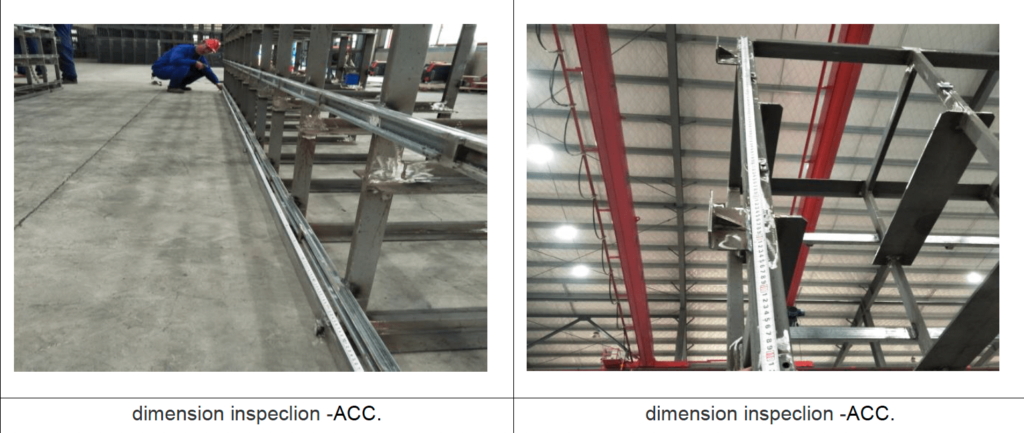
Last but not least, examiners will examine that the surface is tidy of any kind of corrosion, oils, dirt, paint, and any various other contaminant that can affect the high quality of the weld. During the welding procedure, an assessor will make sure that all specifications such as cable fire speed, voltage, strategy and more are being complied with by the welder.
If during any of these phases the inspector notifications a nonconformance, they will certainly allow the welder know just how to correct it to accredit quality work. For job owners, this saves time and money during construction and guarantees authorization by areas or developing divisions. A weld can fall short or weaken too soon for a couple of factors.
The Basic Principles Of 3rd Party Welding Inspection
Any type of contaminant that is not removed will certainly enter into the weld and lead to a weak weld that will certainly fall short. Indicators that welds have actually been contaminated include bumps or holes where the impurities exist. Throughout the welding process, the ideal cooling and heating methods need to be employed.
If also much heat is used then the residential or commercial properties of the steel can be impeded resulting in a weaker metal part. Indicators that inappropriate heating or cooling techniques were utilized include fracturing following to the joint or discoloration on one side of the weld but not the other.
Porosity is when gases like nitrogen, hydrogen, or oxygen released during the welding procedure ices up into the weld during the cooling procedure and form dental caries in the weld. Indicators that this took place consist of openings in the metal. If this happens, the metal will crack or break, and it will result in a weaker metal.
Third-party welding assessments are a demand to guarantee that crucial welds have appropriate high qualities that will certainly guarantee the length of life and structural honesty of any task. They're indicated to prevent any type of future failures that might cause loss of money for homeowner or also tragic occasions. Do get redirected here you need a certified welding inspector? Do not think twice to provide us a call at ( 929 )381-0030.
3rd Party Welding Inspection Fundamentals Explained

This permits for the most efficient use sources and fixes errors in a prompt fashion for all celebrations. Waiting till the last stage for evaluation can result in costly and challenging repair services. The first stage, pre-welding, requires to begin with visual assessments. Throughout this phase, the CWI must have obtained and reviewed the regulating records (e.g.
An appropriately performed post-welding visual evaluation may reveal some small suspensions and require some small repair work, however most of the issues should have been dealt with and fixed before this phase as a result of a total aesthetic assessment program.
Our 3rd Party Welding Inspection Statements
In today's very regulated industrial landscape, making sure the top quality and security of materials and frameworks is vital. RVS High Quality Certifications Pvt Ltd. gives a comprehensive appearance at the advantages of these services, especially when combined with sophisticated methods like Phased Range Screening
Comments on “3rd Party Welding Inspection - The Facts”